

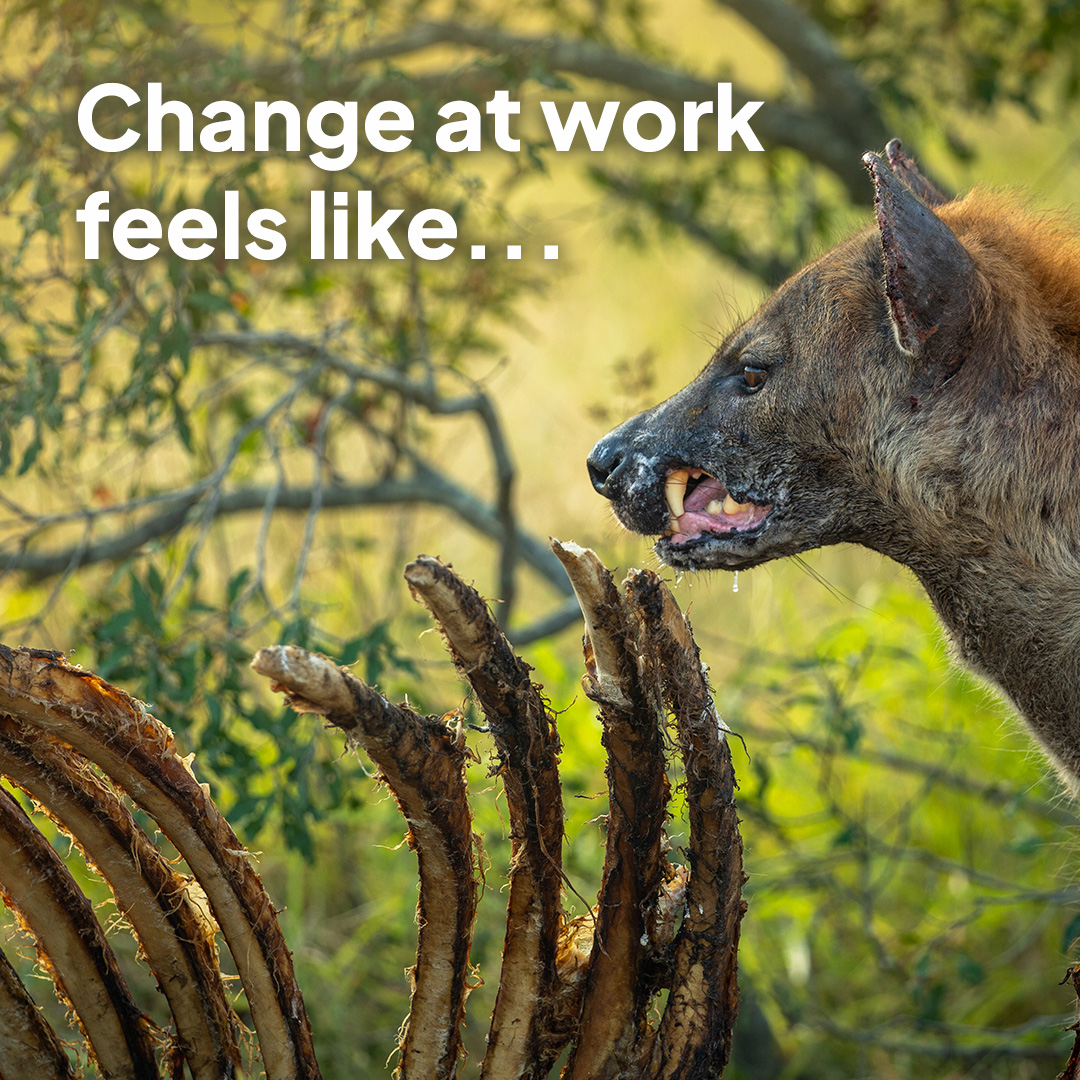
Why does change at work trigger the same brain response as being chased by a pack of hungry hyenas?
It’s just biology. A natural survival instinct. When leaders announce a change programme, the employee’s amygdala (the brain’s irrepressible drama queen) can light up like an emergency beacon. It doesn’t see “improved efficiency”; it sees a clear and present threat to life!
If you’re struggling through a change programme, before you label your team as obstinate, remember, they aren’t being difficult on purpose. It’s more likely they are suffering from some form of “loss aversion,” anxiously grieving a departure from the safety of the known.
Here are some common signs of a primal brain in work panic mode:
- Nostalgia Overload: “Remember how easy the old way was?” (It wasn’t, it just became familiar, and they knew a thousand workarounds)
- Weaponised Paralysis: Asking 347 hypothetical questions about absurdly unlikely scenarios to delay the inevitable go-live.
- The “Ostrich Nod”: Agreeing in the meeting room, but immediately rushing back to their desks to change absolutely nothing.
Change resistance is rarely about laziness; it’s almost always about safety. If you can lower the fear, you lower the barriers to progress.
So try acknowledging what your team is losing, before selling them on what they’re gaining.
Think about it: what’s the weirdest “resistance signal” you’ve spotted (or maybe exhibited) during a transformation project?